- Design
- Closed, over-ear
- Weight
- Approx. 250 g
- Rated battery
- Up to 30 hours with NC on
- Bluetooth audio
- SBC / AAC / LDAC
Choose for the day you actually have
Start by writing down where you listen. A train journey, a shared office and an evening at home ask different things of a pair of headphones. If most of your listening happens while walking short distances, the space an over-ear pair takes in your bag may matter more than another feature on the box. If you sit for longer stretches, fit deserves more attention than a headline specification.
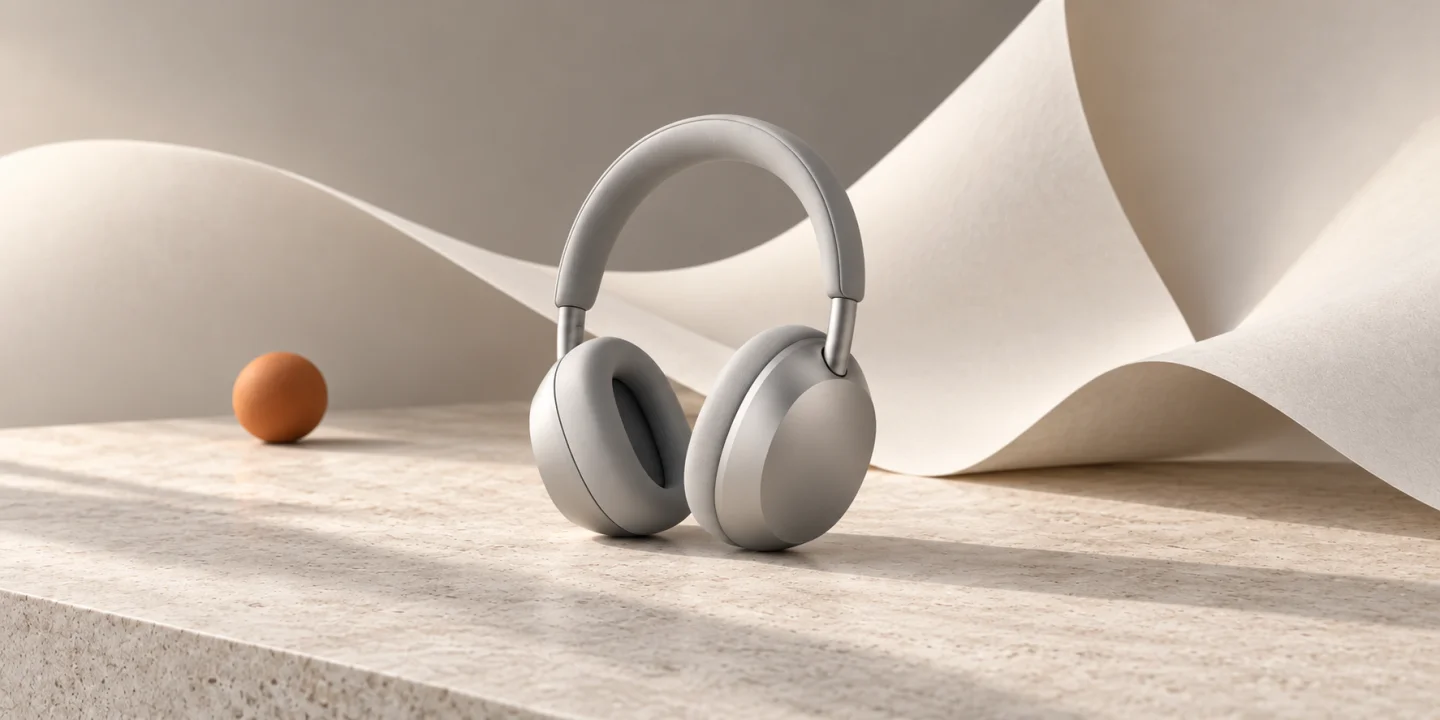
Sony lists the WH-1000XM5 as a closed, over-ear design weighing approximately 250 grams. It offers noise cancellation, an ambient sound mode and a detachable headphone cable. Those are useful options to have, but they describe capabilities. They do not tell us how the ear pads feel with your glasses or how much surrounding speech you will still notice.
Give comfort a proper appointment
When you can try a pair, bring the things you normally wear. Keep your glasses on, adjust the headband and sit in your usual working position. Check whether the cups enclose your ears without pressure on their edges. Move your jaw, turn your head and look down at a phone. A quick mirror check will not answer these questions.
Our buying advice is to take a familiar spoken recording and a few songs along. Listen at a moderate level, then pause the audio. Use that pause to judge the physical fit separately from the sound. Spend a little time simply wearing them while reading, because that resembles an ordinary listening session more closely. If trying the headphones in person is impractical, read the seller's return conditions before ordering and keep the packaging until you have made your decision.
Read the battery figure with its conditions
Sony quotes up to 30 hours of continuous music playback with noise cancellation enabled and up to 40 hours with it disabled. A full charge is listed at approximately 3.5 hours. Treat these as manufacturer figures rather than a promise about your weekly routine. Volume, settings and the way you use the headphones can change the result.
The supported Bluetooth audio formats are SBC, AAC and LDAC. A format on the headphone's list is only useful when your source supports it too. Before making codec support a deciding factor, check the phone or computer you actually use. Also think through your charging routine: would you leave a cable at your desk, carry one, or recharge at the end of each day? That answer is more useful than counting theoretical days between charges.
A five-minute shortlist check
Decide which two requirements are essential before comparing listings. You might choose comfortable fit and a wired option; another listener might put ambient awareness first. Use the same short checklist for every candidate so a sale label or an impressive feature name does not change the question halfway through.
Our editorial conclusion is conditional: this is a reasonable model to investigate when its design and connection options match your routine. A final decision still needs your own fit check and a look at the exact package being sold. This article does not establish microphone quality, measured isolation or a sound-quality ranking. Those require controlled listening and testing that we have not performed.
- Try the fit with your everyday glasses or headwear.
- Check compatibility with your main listening device.
- Confirm included cables, warranty and return conditions.
Start with the fit. Then choose the features.
Put the WH-1000XM5 on your shortlist if you want an over-ear design with active noise cancellation and a wired fallback. Make a fit check part of the purchase. The specification supports a sensible shortlist; it cannot establish all-day comfort or how quiet your particular commute will feel.
Worth considering for
- Commuters who prefer over-ear headphones
- Listeners who want wireless and wired options
- Buyers willing to check fit before committing
Before you decide
- Comfort and noise reduction need a personal check
- Rated battery life depends on settings and use
Sources & notes
Official information consulted for this story. Specifications refer to the named model and generation; check the exact version offered by your retailer.
Published October 24, 2026. No affiliate links appear in this story.